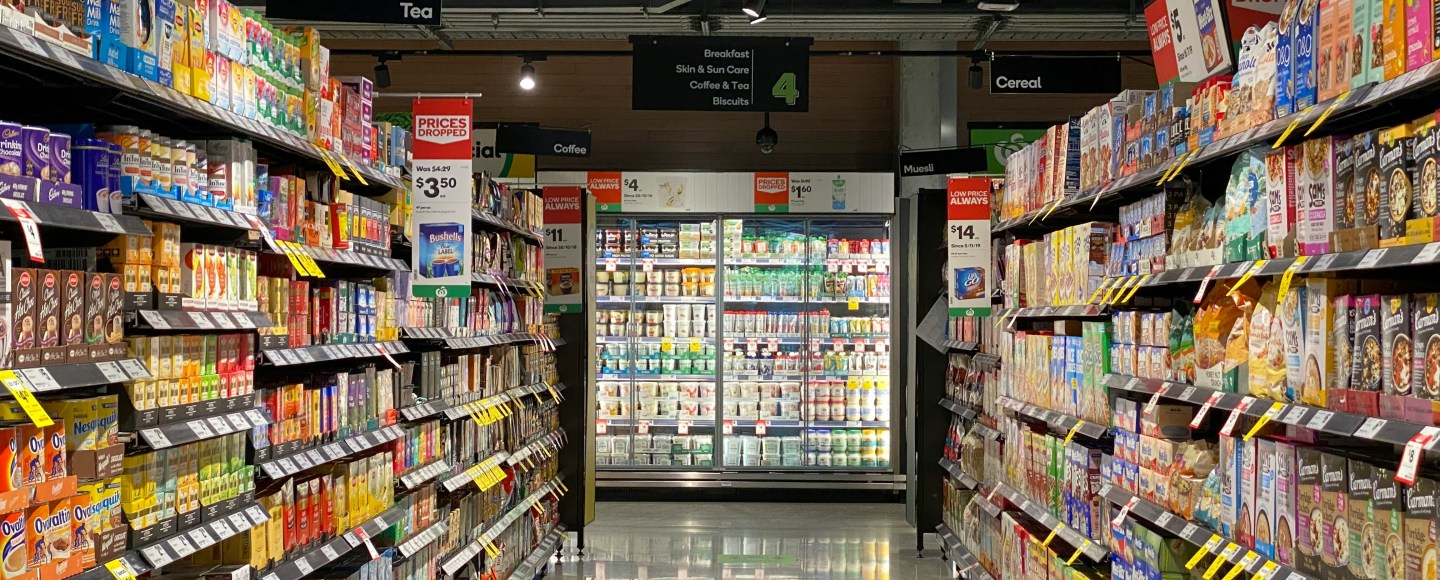

I once saw a stand-up bit, I wish I could remember who it was, where the comedian jokes about coming to the U.S. and seeing an entire grocery aisle dedicated to cereal. In the context of comedy, it’s funny. In the context of reality, it’s disturbing. Because when headlines like “Ultra-Processed Food May Be Linked to Early Death” (BBC) and “Ultra-Processed Food Increases Risk of Early Death, International Study Finds” (The Guardian) start circulating in major media — it’s time we stop laughing and start paying attention.
If you’re unsure what qualifies as ultra-processed food, the BBC article points to breakfast cereals, processed meats, and biscuits. But it goes further: protein bars, low-cal frozen meals, sugar-free drinks, flavored yogurts, and even some fitness snacks. If it’s something you couldn’t reasonably make at home with common ingredients, it’s likely a UPF.
These products are engineered, not cooked, using artificial emulsifiers, colorings, stabilizers, flavorings, and other synthetic compounds. They’re designed for long shelf life, high palatability, and maximum profit instead of maximum nutrition and nutrients..
These articles point to a major international study, published in the American Journal of Preventive Medicine, which revealed that ultra-processed food is responsible for 14% of premature deaths in the UK. That’s nearly 18,000 people annually, a staggering public health issue hiding in plain sight.
While researchers can’t claim definitive causation, the linear dose-response relationship is strong: the more UPFs consumed, the greater the risk of early death. This is not just a theory anymore, there is data to back it up. It is a reality.
What makes this worse is how normalized ultra-processed food has become. Clever marketing labels foods as “healthy,” using claims like “high protein” or “low sugar.” In reality, many of these high in protein foods are high in many other things and loaded with chemicals, additives, and empty calories that disrupt gut health, metabolism, and long-term wellbeing.
As the BBC noted, in some countries, more than half the average diet is made up of UPFs. That’s not just an individual issue, it’s systemic. While some call for urgent changes in public policy to reduce UPF consumption. It’s important to understand our choices on an individual level. And even if you advocate for policy change, it takes time, and profits often get in the way.
Until reform comes from above, the burden falls on us. This is about more than willpower — it’s about education. Look at ingredient lists. If your food has 20+ ingredients, half of which sound like they belong in a lab, it’s time to reconsider.
Start with small, sustainable swaps. Prioritize whole foods. Avoid marketing buzzwords and focus on ingredients you recognize. Learn to read between the lines.
Here’s the truth: you can’t out-train or even outlive a toxic diet. Fitness means little if your fuel is fighting against you. Health is built in the kitchen as much as in the gym.
If your food comes wrapped in plastic, tastes like dessert, and advertises “zero sugar,” it’s likely not food at all, it’s a product. And products don’t nourish you. They manipulate you. They addict you. And eventually, they cost you.
We can no longer afford to ignore this. Not when lives are on the line.
 LIFE ON FITNESS
0 comments on “Processed to Death: The Truth About Ultra-Processed Food and Why It’s Killing Us”